Dreamcatcher Tattoo
Showing all 11 results
-

Back Dreamcatcher Tattoo – Mandala Sun
-

Dreamcatcher arm tattoo – Indian arrows
-

Dreamcatcher arm tattoo – lion head
-

Dreamcatcher arm tattoo – The Pretty Unicorn
-

Dreamcatcher back tattoo – lotus flower
-

Dreamcatcher Tattoo – Indian feathers
-

Dreamcatcher Tattoo – Indian flower
-

Dreamcatcher tattoo – Native American feathers
-

Dreamcatcher thigh tattoo – dragon
-

Indian Wolf Tattoo – Native American wolf with Dreamcatcher
-

Thigh Dreamcatcher Tattoo – The Little Bird
The Dreamcatcher Tattoo: A Native American Emblem Etched in Ink
The dreamcatcher motif has become a classic of body art. Far from being purely decorative, it draws its roots from several Indigenous peoples of North America, notably the Ojibwe. This object, originally woven from willow branches and sinew, served as a talisman hung above cradles. Its role was to filter dreams: trapping bad dreams in its web to be dissolved by the morning sun, while letting good dreams pass through.
Transposed onto the skin, the dreamcatcher tattoo retains this symbolism of protection and connection to the spiritual world. It’s more than just a design; it represents an intention, often that of warding off negative thoughts or preserving a sense of purity. This choice reflects an appreciation for Native American cultures and their vision of balance. For those interested in traditional pieces, Native American accessories such as dreamcatcher Indian headdresses or Native American rugs with dreamcatcher motifs offer a glimpse into original craftsmanship.
Key Elements and Design Variations of the Dreamcatcher Tattoo
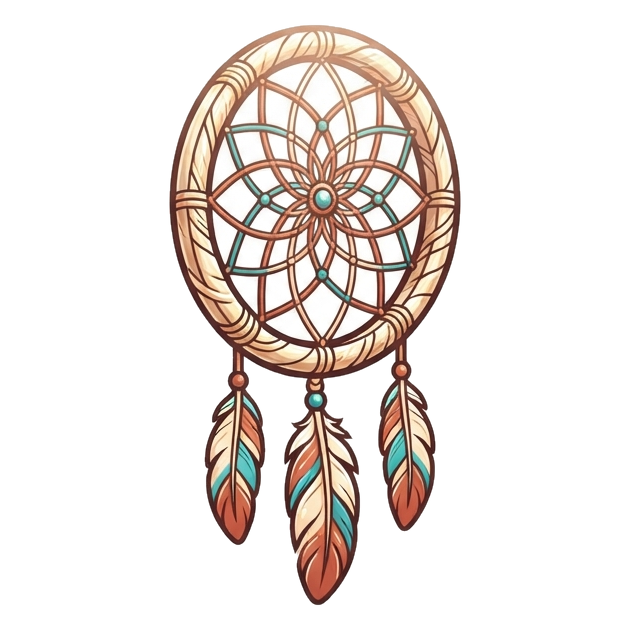
A typical dreamcatcher tattoo incorporates several distinct elements. The ring, often depicted as a wooden circle or a vine, symbolizes the cycle of life and unity. The inner web, whether simple or as intricate as a mandala pattern, is the centerpiece of the filter. The feathers, once sourced from sacred birds like the eagle or the owl, are drawn with a flowing movement that evokes lightness and the descent of good dreams. The beads, finally, can symbolize the spider that wove the web or the good dreams that made it through the filter.
Variations are numerous. Some prefer a clean design, in black and grey only, for a graphic and timeless look. Others opt for touches of colour, particularly turquoise, ochre red, or brown, to echo the natural tones of the original materials. Incorporating other Native American symbols, such as totem animals (wolf, bear), arrows, or stylized eagle feathers, enriches the tattoo’s personal meaning. It’s important to choose a design that speaks directly to its wearer, rather than following a fleeting trend.
Placement and Size: Tips for Your Dreamcatcher Tattoo
Choosing the placement of a dreamcatcher tattoo depends on several factors: the desired size, the level of visibility wanted, and pain tolerance. For a large design, the back, thigh, or shoulder offer ideal canvases, allowing for detailed webbing and feathers. A more discreet format can be considered for the wrist, ankle, behind the ear, or the nape of the neck. It’s worth anticipating how the design will follow the body’s lines, particularly for motifs with hanging elements like feathers.
The area of the body also affects pain perception and tattoo aftercare. Fleshier areas like the bicep or calf are generally less sensitive than areas where bone is close to the skin, such as the collarbone or elbow. Discussing these aspects with an experienced tattoo artist helps ensure an optimal result and harmonious integration on the body. For those exploring Indigenous-inspired body art, Native American tattoos bring together a broader set of motifs and meanings.
How do you choose the right size for a dreamcatcher tattoo?
The size of a dreamcatcher tattoo will depend on placement and the desired level of detail. For a statement piece on the back or thigh, a size of 20 to 30 cm in diameter is common, allowing for an elaborate web and flowing feathers. For smaller areas like the wrist or ankle, a design of 5 to 10 cm will be more suitable, with simplified elements to keep the motif legible.
What should you consider for a dreamcatcher tattoo on a visible area?
Placing a dreamcatcher on a highly visible area like the forearm or neck calls for thought about professional and social integration. A design of 10 to 15 cm on the forearm can be a good compromise, balancing visibility and adaptability. Make sure the chosen style and symbolism will remain meaningful to your identity over time. Post-tattoo care is crucial to preserving colours and linework on these frequently exposed areas.
Can a dreamcatcher tattoo be combined with other motifs?
Yes, the dreamcatcher lends itself well to compositions. It can be integrated into forest scenes, mandalas, or paired with totem animals like the wolf or deer. It’s worth discussing the visual and symbolic coherence of the overall piece with your tattoo artist. For example, a dreamcatcher with a bird taking flight can reinforce the idea of freedom and lightness. Adding a flower can soften its protective symbolism.
Which graphic style should you choose for a dreamcatcher tattoo?
The graphic style ranges from detailed realism to clean linework. A realistic style will emphasize the texture of the feathers and the fineness of the woven web. Dotwork style, with its stippled points, can create a mystical, tribal effect. For a more contemporary look, graphic or geometric style is also an option. Your aesthetic preference and your tattoo artist’s portfolio are essential guides for this decision.